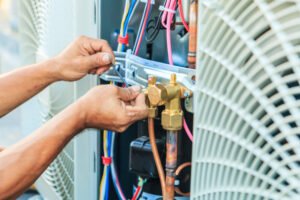
Expert AC Repair Home Services In Cypress
AC repair in Cypress, TX is a home service that finds and fixes air conditioning problems. If your house is heating up and you don’t know who to call, start here.
First, check three things if it is safe: the air filter, the thermostat and the breaker. If those don’t fix it, call a licensed contractor, look up the license and get a price in writing. Don’t wait long, because the humid season in Cypress runs from about April 9 to November 1.
AC Repair Highlights
- Most AC trouble in Cypress homes comes from six issues: refrigerant leaks, dirty air filters, faulty capacitors, electrical problems, thermostat issues and ductwork leaks.
- Check three things before you call: the air filter, the thermostat settings and batteries, and the breaker.
- Stop and call a licensed technician for anything that involves refrigerant, capacitors or wiring.
- Texas requires AC work to go through a state-licensed, insured contractor, and you can look up any license on the TDLR LicenseSearch portal.
- Yearly service, preferably in early spring, helps prevent breakdowns before the long humid season starts.
Common AC Repair Issues in Cypress, TX Homes
Most AC repair calls in Cypress, TX homes trace back to a short list of problems. Before you check anything, follow three safety rules.
- Don’t reset a breaker if you smell burning, see damage or see water near electrical equipment.
- Don’t open equipment panels, indoors or outdoors.
- Don’t handle refrigerant, capacitors or wiring. Those jobs belong to a licensed technician.
Next, start with what you notice. The causes below are possibilities, not a diagnosis, because several symptoms share causes.
- Warm air from the vents: a refrigerant leak, a dirty filter or a thermostat set wrong.
- Ice on the unit or the lines: a clogged filter or low refrigerant.
- Short cycling (turning on and off over and over): a faulty capacitor or a thermostat problem.
- Humming, or a slow start: often a faulty capacitor, sometimes another electrical fault.
- Won’t turn on at all: a tripped breaker, dead thermostat batteries or an electrical fault.
- Hot rooms, weak airflow and dusty air: leaky ductwork or a dirty filter.
Reduced airflow, unusual odors and loud noises are also common warning signs, and so is age once a system passes 10 to 15 years. Don’t wait on any of them. Small problems tend to grow into bigger repairs and higher energy bills.
Refrigerant Leaks
Refrigerant leaks hurt the performance of both ductless and central AC systems. Refrigerant is the fluid that carries heat out of your home. Leaks start when small holes or cracks form in the copper lines that carry it through the unit.
What you’ll notice: warm air from the vents, ice on the lines and energy bills that climb. The system runs longer and works harder to reach the temperature you set.
What you can check: nothing on the refrigerant side. Finding and fixing a leak takes special tools and a licensed technician. Topping off the refrigerant without fixing the leak does not last, because the new refrigerant escapes through the same hole.
When to call: as soon as the air stays warm with a clean filter in place, or you see ice on the lines. Low refrigerant adds wear to the compressor, the part that pumps refrigerant through the system.
A compressor is one of the most costly parts to replace. Fixr’s national cost guide lists leak repair at $200 to $1,500 and compressor work at $600 to $3,000. Those are national figures, not Du-West quotes.
Dirty Air Filters
Dirty air filters are the first thing to check yourself. Your AC pulls air through the filter to cool your home, and a clogged filter blocks that airflow. The system then has to work much harder than it should.
What you’ll notice: weak airflow, longer run times and higher bills. A badly clogged filter can also make the evaporator coil freeze over. That’s the cold indoor coil that cools the air, and once it ices up, cooling stops.
What you can check: pull the filter out and hold it up to the light. If you can’t see light through it, replace it. A filter swap is a homeowner job, not a repair, and it clears up many small cooling complaints.
When to call: if you see ice, turn the system off and let it thaw. If the coil freezes again with a clean filter in place, something else is wrong and you need a technician.
Faulty Capacitors
Faulty capacitors keep your AC from starting and running smoothly. A capacitor is a small electrical part that gives the motors a jolt of power. The setup varies by system, but a start capacitor helps launch the compressor and a run capacitor keeps it going.
What you’ll notice: a humming sound, a unit that struggles to kick on, or short cycling. A weak start capacitor causes hard starting, which strains the compressor. A failed capacitor can stop the compressor from starting at all, and then you have no cooling.
What you can check: nothing inside the unit. Capacitors are electrical parts, and testing or replacing one is a job for a licensed technician.
When to call: as soon as you suspect a capacitor, since waiting raises the risk of more damage. Du-West technicians are trained to diagnose and replace bad capacitors. If the technician finds hard starting, ask whether a hard start kit would help protect the compressor.
Electrical Problems
Electrical problems in an AC system usually come from faulty wiring, broken relays or damaged circuit boards inside the unit. Left alone, they lead to on-and-off cooling or a full shutdown without warning.
What you’ll notice: a breaker that trips, a unit that won’t start or a burning smell.
What you can check: only the breaker panel, and only if there is no burning smell, damage or water nearby. If the AC breaker has tripped, reset it once.
If the breaker trips again, leave it off and call. A breaker that keeps tripping is telling you something is wrong.
When to call: right away if you smell burning, and turn the system off first. Du-West technicians use diagnostic tools to find where the fault is. They check the wiring, relays and circuit boards, repair damaged connections and replace faulty parts.
Thermostat Issues
Thermostat issues can make a healthy AC look broken. The thermostat tells your system when to run, so a bad one can make the AC run nonstop or not run at all.
What you’ll notice: the wrong temperature on the screen, no response when you change the setting, lost settings, or rooms that cool unevenly. A thermostat that reads the temperature wrong can leave some rooms too hot and others too cold.
What you can check: make sure the mode is set to “cool.” Check that the set temperature is below the room temperature. Then put in fresh batteries.
When to call: if those checks don’t help. Du-West Services installs, replaces and repairs thermostats. A technician can also suggest a programmable or smart thermostat if yours is due for an upgrade.
Ductwork Leaks
Ductwork leaks let cooled air escape into your walls, attic and crawl spaces before it reaches your rooms. Poor installation or sloppy repair work is a common cause.
What you’ll notice: rooms that stay hot, weak airflow, dusty air and high bills. You’re paying to cool spaces nobody lives in.
What you can check: look only at ducts you can reach easily for gaps or loose joints. Don’t climb into an attic or crawl space that isn’t safe. Note which rooms run hot, since that helps the technician find the leak faster.
When to call: if the leak is somewhere you can’t reach, or airflow stays weak after a filter change. Technicians check for and seal duct leaks as part of AC maintenance.
Why it matters more in Cypress: leaks in attic ducts can pull hot, damp air into the system. That makes it harder to keep indoor humidity at the ideal level of less than 60%.
What Does AC Repair Tend to Cost?
AC repair costs an average of $375 nationally, and most repairs fall between $250 and $700, according to Fixr’s national cost guide. These are rough national figures, not Du-West quotes. Your price depends on the part, the system and the time of day.
The same guide lists a minimum service fee of $75 and labor rates of $75 to $175 per hour. For example, it puts a capacitor replacement at $100 to $400 and a refrigerant recharge at $100 to $600.
What Should You Ask About an Estimate?
Ask what failed, what the estimate covers and whether the total can change before you agree to any work. These questions help you avoid a surprise on the bill:
- What failed, and how did you confirm it?
- Is there a service-call or diagnostic fee, and does it count toward the repair?
- Does the price include both parts and labor?
- Is this a fixed total, or could it change?
- Will you ask me before doing any extra work?
- What warranty covers the parts and the labor?
- For a refrigerant recharge, does the price include finding and fixing the leak?
- Do after-hours calls cost more? Emergency repairs can run 2 to 3 times normal hourly rates.
- Will I get the estimate in writing before work starts?
What If a Repair Goes Wrong?
If a repair by a licensed contractor goes wrong, you can file a complaint with TDLR. Try to work it out with the company first, and keep your written estimate and invoice in case you need them.
Why Schedule Du-West Services for Your AC Repair Needs in Cypress, TX?
Du-West Services repairs all AC brands and models in Cypress homes, from simple fixes to complex problems. Du-West discusses all repair recommendations and costs with you upfront, before work starts.
Timing depends on parts and on technician availability in your area. When you book, ask three things: the next open appointment, whether emergency service is available, and whether parts could mean a second visit.
Du-West also offers scheduled maintenance and other HVAC services. HVAC means heating, ventilation and air conditioning. A yearly visit, preferably in early spring, helps you catch small problems before the hottest months.
Hold Du-West to the same checks as any other company. Ask for the Texas license number when you book and look it up on the TDLR LicenseSearch portal. Confirm that your neighborhood is covered, and ask about fees for after-hours calls.
If the quick checks above didn’t bring your cooling back, Du-West Services is worth a call for AC repair in Cypress, TX. Schedule the visit if the license checks out, the timing works and the written estimate looks fair. Tell the team what you noticed and what you already checked, so your technician can get to the cause faster.
AC Repair F.A.Q.’s
1. What does an expert AC repair home service in Cypress include?
A licensed technician comes to your home, inspects your cooling system, and fixes the problem right there. Common repairs cover refrigerant leaks, worn capacitors, clogged drain lines, and failed compressors.
2. How do I know my air conditioner needs repair?
Watch for warm air from the vents, weak airflow, strange noises, or a sudden spike in your electric bill. In Cypress’s heat and humidity, these signs can get worse fast, so call a technician early.
3. How often should I schedule AC maintenance in Cypress?
The U.S. Department of Energy recommends regular upkeep of filters, coils, and fins to keep your system running efficiently. Most HVAC contractors suggest a tune-up once a year, ideally in spring, before the Texas summer kicks in.
4. How do I choose a trusted AC repair company in Cypress?
Pick a contractor with a valid Texas license, which you can verify through the Texas Department of Licensing and Regulation. Checking recent Google reviews is also a quick way to gauge their reliability.